
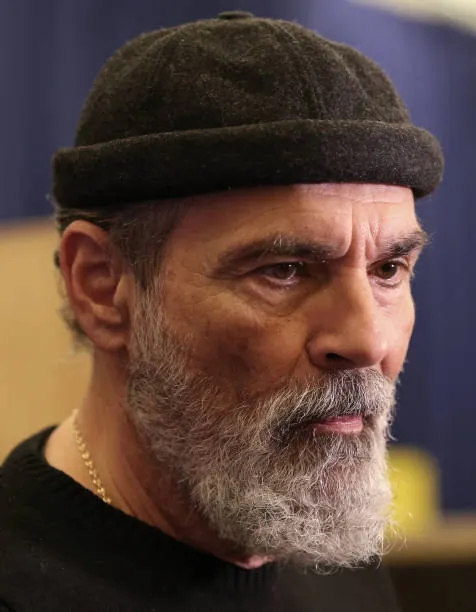
Thanks to Carla Zerbi of Rouge Promozione Musicale, we had the chance to talk with Bruce Sudano on the occasion of the first digital release of his 1981 solo debut, “Fugitive Kind”. Bruce has been many things in his career, which has now entered a new phase. Born in Brooklyn in 1948 to an Italian-American family, he grew up surrounded by music from his earliest years, studied at St. John’s University in New York, then learned the trade at Morris Levy’s Roulette Records under the guidance of Tommy James.
From there began a career that over sixty years has led him to sign nine solo albums and to work with artists of the calibre of Donna Summer, Dolly Parton, Reba McEntire, Michael and Jermaine Jackson and Robert Palmer, among others.
With Donna Summer he was also a couple in life for thirty-two years, a very strong bond he will tell us about. He also founded the label Purple Heart Recording Company, on which he has released his most recent records. In his wife’s career he played many roles: lyricist, manager, producer, touring musician and backing vocalist, going so far as to write, in 1979, the title track of “Bad Girls”, the best-selling album of Donna Summer’s career. Bruce is a true lover and deep connoisseur of music and of everything around it, and we leave you to his words. It was a real pleasure to interview him. Thank you, Bruce.
– Hi Bruce, and thank you so much for your time. Can you tell us something about the first digital release of your beautiful debut album “Fugitive Kind,” originally released in 1981? –
Well, I’m very excited that my first solo album “Fugitive Kind” is finally up on all the streaming services because it was the only piece of my recording history that wasn’t available to hear.
So now my full catalogue, from my first band Alive and Kicking, all 4 Brooklyn Dreams albums, as well all my solo albums can be found and listened to.
– How do you see your music in this digital era? –
I like the idea that the full story of an artists creative life can be easily discovered. You can listen through and recognize all the different phases of a career. The evolution of sound and production technique, along with the layers of life experiences that are reflected in the songwriting. For me it paints a colorful picture of where I’ve been stylistically, sonically and emotionally. It’s a portrait that has subtly changed over time and is ongoing as I continue on my artistic journey.
– What are the main changes you notice in today’s music compared to the seventies and eighties? –
On the record company side, things certainly have changed because there’s much less artist development now. Record companies are now picking up an artist once they’ve almost fully developed themselves. Then they step in and try to bring it to the masses. Unfortunately, frequently it doesn’t happen and in many cases, it hurts the forward progress the artist was making on their own. The good side of this is that we’re in a world where an artist can develop themselves while remaining independent. This was something that was practically impossible in the 70s and 80s.
On the music side of things, you could say things have changed and yet remain the same. In pop music, overtime, there are always some subtle changes sonically as different sounds become fashionable. As for song structure, I don’t see that much change. All the tried and true methods still have their place in the current market. I think the biggest change might be in lyrical cadence. It’s the one area I find interesting and it challenges me to find ways to incorporate those melodic and rhythmic changes into what I’m writing. At the same time, there are many artists who are thriving in the traditional song format that evolved out of the 50s and into the 60s & 70’s, as well as artists who build their careers on the blues or traditional R&B stylings. Rap, hip-hop, dance, heavy metal, rock all have their audiences. Of course in America, country music has a big market share but to my mind I view it as pop music. The good news is that there’s room for everything now and really there’s not one genre that dominates. Everything can have its own little pocket to thrive and exist.
– What was the music business like when you started out, and in the era of your first successes? –
I had my first chart success in 1969 as a co-writer on a Tommy James and the Shondells song called Ball of Fire. In those days it was all about radio, AM then FM, and a record company was an exciting place to be. There was an energized team of people working daily with a raw passion trying to break a record by getting a song added to a radio station. I used to really enjoy going up to the record company, feeling that energy, meeting the promotion people, the art department, strategizing different ways to make a record happen. It was a creative environment on many different levels. It was a great community to be a part of. Then, there was nothing quite like having a hit record because everybody listened to the radio and everybody knew your song. It really gave you a measure of success. Radio still plays a part in the current climate but it nowhere near has the same impact. Unfortunately, that kind of energy generally doesn’t exist at record companies anymore. The vibe is much more sober and corporate.
– “Fugitive Kind” is an album of a beauty that almost hurts, written and played from the heart, the way they don’t make them anymore. How did you come to collaborate with your late wife Donna Summer? –
Donna and I met at a friends house in Los Angeles and creatively we hit it off immediately.
We started writing songs together that very day and it just continued from there, that’s really how we got to know each other. Thank you for complementing my Fugitive Kind album but to your point about they don’t make them that way anymore, I would disagree. I think there are many artists out there doing great work, putting their hearts and souls and inspiration into their recordings. Maybe the problem is people don’t listen the way they used to. Music isn’t the central force in the culture anymore and because of the ability for everybody to record and release a record there’s a lot of stuff coming out all the time. It’s an overload. So it’s easy for great records to get lost in the shuffle.
– Dolly Parton, a great artist who recently passed away, reinterpreted your song “Starting Over Again” and turned it into an immense country hit. How did you experience that? –
It really was a stroke of good fortune. My parents were getting divorced and I started writing this song about it. Donna came in the room and added some thoughts and then she decided to sing it on a TV show in the hope that maybe it would keep my parents together. That didn’t happen but the next day Dolly Parton’s people called and asked if she could record the song. It went to number one on the country charts and 16 years later Reba McEntire re-recorded it and made it the title track of her album. My version of the song is on the Fugitive Kind album.
– Of the other artists you have collaborated with, with whom did you feel most at ease? –
Well, I think the answer to that question is obvious, Donna Summer. We were partners in life for over 30 years. Beyond that, in truth, I didn’t often collaborate with the artist themselves. More typically I would work with the producer.
– Your endless career continues to this day. How do you experience music now, and what do you see in your musical future? –
Songwriting is the center of who I am as an artist.
My philosophy is keep living, keep writing. On the other side of the coin, I really enjoy performing. Beyond the recording, performing the songs live is what gives them life and at the same time it makes me feel alive. The urgency of the moment is exhilarating. I’ve been addicted to it since I started putting bands together in my early teens. So I expect my musical future to be a continuation of those things.
– You spent many years at the side of your wife Donna Summer, often working together as well. What did she leave you with? –
I would say she left me with a spirit of hope, an abiding faith, a love for all people and a sense of commitment to doing my best to be a positive influence in the world.
– You currently live divided between your two homelands, the USA and Italy. How do you see these two countries in these dark times? –
Well, we are certainly living in a time of turmoil all around the world. I’m an Italian American and I feel intrinsically connected to both cultures and both countries. We live in a time of great political division. I pray for leaders to come along who can inspire us and bring people together with common sense and compassion.
– Your music speaks for you, but what drives you to keep writing such beautiful music after all these years? –
I see it as a vocation, a calling.
It’s the one place where I know who I am. Otherwise I get lost and start bouncing off the walls.
– If you had the chance to speak to the Bruce of “Fugitive Kind,” what would you say to him? –
Thank you so much for your time. It is an honor to have the opportunity to interview you.
I would probably tell him, “relax Bruce, it’s gonna be OK.”
Thank you for your good questions and for giving me this forum.
This interview is also available in Italian on iyezine.com.