
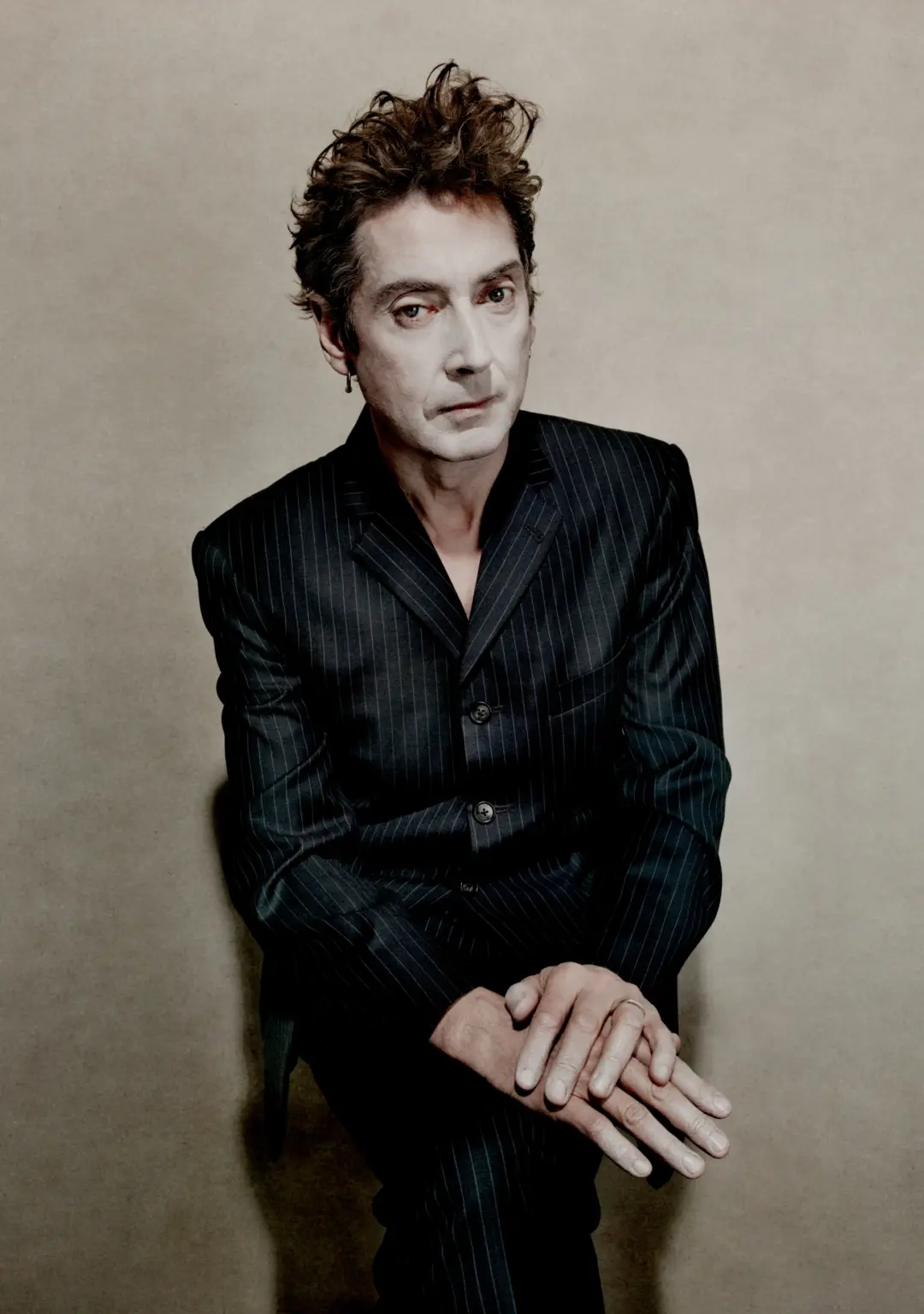
Peter Edward Clarke—universally known by his stage name, Budgie—was the drummer for one of the most iconic and beloved musical acts of the post-punk era: Siouxsie and the Banshees.
He joined Siouxsie Sioux’s lineup in 1979 as a temporary replacement for original drummer Kenny Morris, but soon became a permanent member after Morris announced his definitive departure. Budgie remained with the Banshees until their official breakup in 1996.
Prior to this, he had been a member of Big in Japan, the Spitfire Boys, and The Slits, placing him at the very heart of the explosive British punk scene during its most vibrant years.
A charismatic and witty musician with a highly distinctive style — widely recognized by his peers as one-of-a-kind — Budgie profoundly shaped the Banshees’ sound throughout their entire discography and across hundreds of live performances spanning more than two decades.
Concurrently, starting in 1981, he co-founded and remained an active member of the side project The Creatures, alongside Susan Ballion (Siouxsie)—whom he later married in 1991.
More recently, his friendship with Lol Tolhurst (co-founder and former keyboardist of The Cure, whom we interviewed in 2021) led to the creation of the popular podcast Curious Creatures, which explores the music of the 1980s. This collaboration also gave rise to the musical project Los Angeles, developed alongside Jacknife Lee, a renowned producer and mixer who has worked with artists such as U2, R.E.M., The Killers, Editors, Kasabian, and many others.
Il Deca interviewed Budgie exclusively for IYE, taking a comprehensive look at the career of a true key figure in the alternative rock scene over the last fifty years.
Hello, Budgie. Virtually welcome in Italy! Just last week I was listening - for the umpteenth time - to JUJU that is my favourite album of Siouxsie’s discography. Every time I’m surprised how nowadays in these songs your style can sound so topical, contemporary… It seems music created just a couple of years ago. Maybe this is due to the strong influence you sown through these last four decades. Besides, you’re surely conscious of this: the podcast you’re managing together with your friend Lol Tolhurst (Curious Creatures) is investigating right about the enduring legacy of post-punk and its contemporary relevance. As a matter of fact, many bands of the new millennium keep on being inspired by the most relevant works of that time.
Juju still surprises me with every listen. Even though I know some of the music had been routined in soundcheck, we were always playing live (a lot in Italy).
Voodoo Dolly has always had a life of its own, and Monitor was a studio creation.
The brooding sound and ominous mood of Nightshift in the studio recording, manages to create a deep expression whilst maintaining a narrow dynamic. It became thunderous live but in its studio infancy, it retains a timeless quality which could be a key to Juju’s endurance - never sounding ‘of any era’.
As my habit, I like to mention some anecdote of my youth, when I talk with some protagonist of those years. I remember in 1983 I had read on a magazine a review about Feast (the first album of your side-project The Creatures); and the reviewer wrote something like “on the circuit of Siouxsie and The Cure these artists make records as frequently as normal people goes to pee”. It could be a humorous way to take note of a truth. Perhaps, in those days, we were not able to seize that big ferment and its consequences. Between 1977 and 1984 a lot of things happened. I’m sure: that kind of hyper-production was inevitable. And - moreover - quality of those records was averagely high: just think about The Glove and The Creatures in fact.
The Creatures Feast took the spontaneous studio ethic to another extreme. There was no time to ‘jam’ or flesh out an idea, we recorded and mixed everything in two weeks, including the photos for the cover.
Whilst waiting for Severin and Smith to finish Blue Sunshine, The Creatures recorded Mel Torme’s ‘Right Now’ and B-side ‘Weathercade’ and released it to achieve the highest chart position since Hong Kong Garden. Yes, we could be quick and effective in those distant times!!
I’ve often read and listened - talking about Banshees’ music - that you had a tribal vein, a tribal mood. I think that was for your drumming style, above all. A very personal creative style. And partly for a certain “vocal technique” used by Siouxsie. I see, for example, in a song I love very much that’s Cascade, you used a main texture of low tom and kick. Less hi-hat, more low drums. The same thing in Standing There by The Creatures (you wildly played huge timpani). It was a not uncommon drumming style, in the post punk scene. I think about Killing Joke, Bauhaus, something by The Cure too. Do you agree about the word “tribal”? Had your sound some reminiscence of a primitive culture?
I first heard ‘tribal drums’ in hollywood wild west films. it was the native american drums of war dance , healing and communication.
I next heard it on the B-side of Redbone’s ‘Witch Queen of New Orleans’ a track called ‘Chant 13th Hour’ begins with that filmic, drumming, chanting and ankle-bells.. before it enters a faux-funk workout, complete with groovy hi-hat 16ths and that 1970’s cardboard-box tomtom sound.. the sound I did everything to move away from! I wanted my toms to ring like birdcages!!
Nocturne is a true masterpiece in live music history. It’s a fundamental chapter in Banshees’ discography, as well as one of the most meaningful live albums of those years. Played quite intensely, full of pathos, with a band line-up I consider a perfect balance for your style now mature. The audiovideo version of that concert at Royal Albert Hall (on VHS tape) has been a steady entertainment of our domestic afternoons in winter. We young dark fans were delighted watching it.
I wish I had a film of ‘Humble Pie - Rockin’ the Fillmore’. That was the album i played alone every saturday night when my family was out. it was my personal and only experience of a live concert in my youth. It surprises me how much influence these early listening favourites had on my playing. it is not the style of drumming though I now know it is very self-taught and with few drum rudiment skills. But it holds the same merits that you give to Nocturne:- intensity, pathos, incredible power with huge dynamic shifts, and like Siouxsie, Steve Marriot delivers passionate vocals throughout. My favourite track on Nocturne is ‘Pulled to Bits’ in its reinvention with full drums and guitar, I loved drumming to Siouxsie’s onomatopoeic lyrics and style use my drumming here owes more to Jerry Shirley of Humble Pie than any tribal influence.
As you know, some years ago I interviewed your buddy Lol; and talking about the watershed that Punk Culture marked between excesses of prog-rock and essentiality of new wave, he said to me something really interesting and sacrosanct about virtuosity and personal style: “It’s the mistakes you make that become your sound. With us it was our limitations that became us.” What’s your opinion about? (I tell you that I agree with Lol, by the way).
I’d agree with Lol about technical limitations being the nucleus of each band’s sound and style.
A big factor of pre-digital recording, was the need to get a complete ‘take’ of a song without errors. overdubbing would mean the drums would be under closest scrutiny to ‘get it right’!
But errors or mistakes were embraced if the ‘feel’ was good!
If a recording of the whole band with live vocal had that magical quality, then there were no mistakes, just alternative versions!!! eg: Monitor :)
You’ve been member of some other relevant bands, in the ’70s, in the full tide of punk. The Slits, Big in Japan, The Spitfire Boys. So, it was a big ferment period, as I said. Rock’n’roll scene was crawling with all sorts of musicians and singers. Give us some good and curious memories of those years, please. With Spitfire Boys you were Blister - by the way - and not Budgie!
I became Blister with the Spitfire Boys as my fingers were always blistered and as a way of keeping our real names hidden, to avoid detection by the DHSS who paid us a weekly benefit in lieu of us finding a ‘real’ job!
The Slits was unexpected. I had seen The Slits perform several times.
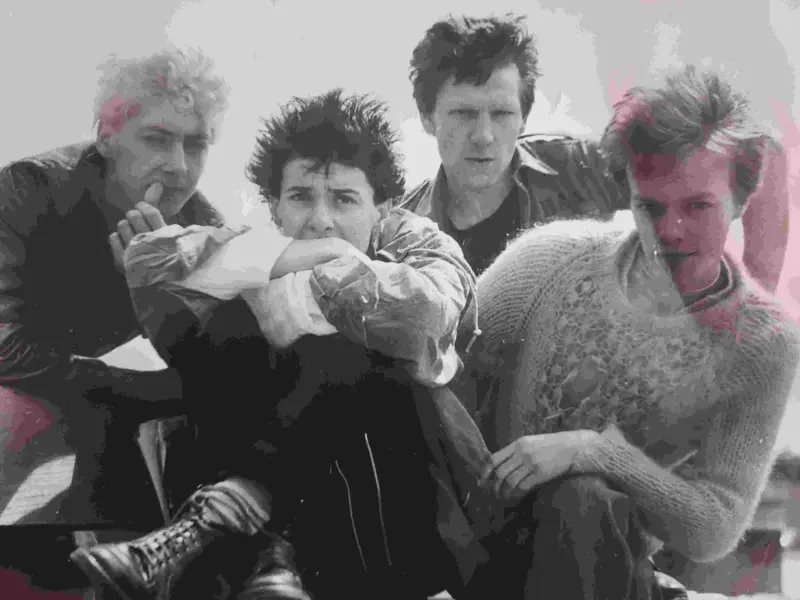
The Spitfire Boys, 1977. Photographer unknown.
Susan “Siouxsie” Ballion still has a great popularity, here in Italy. Thirty-years later from your last great classic records and your maximum exposure, I still see many die-hard fans, dark girls with the typical Siouxsie makeup… In short, she’s still a cult artist. I think it’s not only a question of look, though. You’ve been her drummer for years… and her husband, too! You deeply know her. What can you say about this power of Siouxsie’s personality?
Siouxsie had very little ambition to be a star, she didn’t care about the ‘music business’ she always gave 100% in the studio and 200% in live performance. She seemed intent on retaining the mystery of persona that her heroes and heroines possessed. She would wilfully contradict all expectations as to who or what she should be - disdainfully obstructive to analysis.
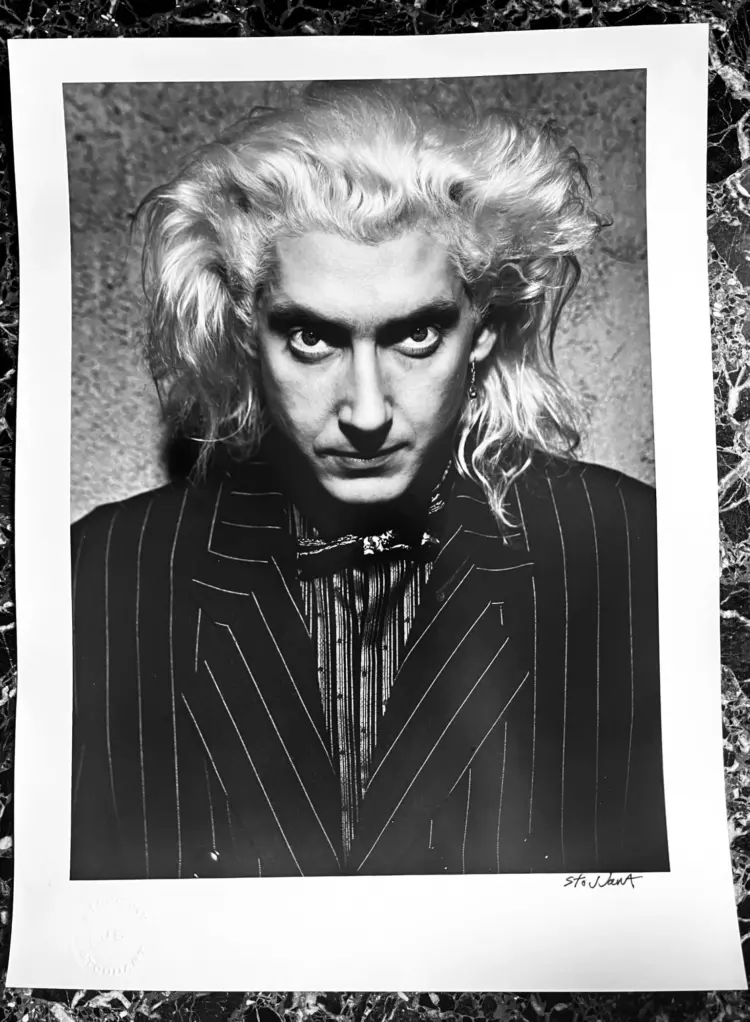
Budgie in 1988. Photo: John Stoddart.
When did you become aware that your disbanding was in the air? In 1995 the last official album signed by Siouxsie and The Banshees: The Rapture. Not one of your most celebrated works, if compared to JUJU and Kaleidoscope. Anyway I think it was only theoretically your final chapter. In practice, Banshees’ furnace has never extinguished because you were involved in many other projects with dozens of good ideas. The Creatures kept on producing good music and they were the left rib of the band, as someone wrote years ago.
It may sound strange in hindsight, but the band almost ended after Peepshow! Siouxsie and Severin had a huge bust up on the 1988-89 Peepshow tour in the USA and didn’t speak to each other for almost two years.
The Creatures maintained the creative momentum with Boomerang and toured in 1990 for the first time as a duo. Reforming the group for Superstition was a slow and difficult process but we reinvented and reignited with our biggest US hit ‘Kiss Them For Me’ and our guest spot on the first ‘Lollapalooza’ which began as a touring festival - a tour which almost ended us again - due to excess and exhaustion.
But the first signs of a change in fortune came during the writing period for The Rapture. Again with hindsight we can now see those signs clearly, the growing dominance of the dance scene, escalating costs of live performance and diminishing sales. These alone would not have been insurmountable but there was a more cynical obstacle emanating from the recording industry. Our recording contracts like many others had, due to escalating recording costs and an increasing percentage of profits in favour of the artist, become less profitable for the major labels. The labels cut the umbilical, we were back to being an unsigned band. Siouxsie and I moved to France, we invested everything in becoming self-sufficient, to make a place where the band could write and record - but The Rapture was released without proper promotion and by the end of touring, The Banshees was done…
but, The Creatures continued for another TEN years!
In the Banshees you shared your artistic path with two of the most celebrated and original guitar players of the whole post-punk scene: John McGeoch and Robert Smith. In those years the Banshees were an incredible melting pot of style and experiences. John came from Magazine (great band I truly love) and Robert from The Cure. How’s playing with them?
Playing with John McGeoch was a dream, John was a musical telepath. I don’t recall many discussions about what we played, we simply played. ‘As long as I can see your left foot on the hi-hat pedal!’, John said he would be free to play. We had an unspoken trust in each other’s ability to support, respond and invent, constantly and in an instant.
With Robert Smith that same trust was developed on the hastily reformed ‘Join Hands’ tour - some nights the audience knew the songs better than we did!
Recording ‘Hyaena’, Robert initially didn’t want to play guitar, so with just Keyboard and drums, Robert and I came up with the workings for ‘Swimming Horses’ and ‘Take Me Back’. Robert resumed the guitarist role in his own idiosyncratic way, but it was on ‘Take Me Back’ that I felt that magical musical connection.
Speaking of look again - because look has been an important element in pop music scene, in those years… - with the Banshees you dressed the more “rock” clothes, if compared to the rest of the band. Siouxsie was a mix of gitane, dandy, oriental, gothic… A sort of Exotic-Dark Lady. Steve Severin was nearly always a dandy. You often wore t-shirts and tanktops, on the contrary. It’s not so comfortably to play drums dressing suite and tie, I know. But… maybe this was a heritage of your militancy in so many early punk bands. Did you preserve a more lasting punk-artist spirit? Oh! Maybe I’m saying some bullshit..!!
I always grimace when I see photos of the band taken before going onstage, I played wearing dance tights and Lonsdale boxing boots, with a long skirt-like T-shirt, and a head-band! In my defence the head-band was to hold my headphones in place! On the Juju tour, we had removed all traditional rock & roll furniture from the stage. All lights, monitors and amplifier cabinets were hidden below the stage platform - beneath perspex sheets and wire grills respectively.
Clothing wise at this time, I liked leather jeans, distressed Tees and motorcycle boots, but when I thought I had ‘loadsa money’, I became partial to rough-silk suits, Jean Paul Gaultier, Vivienne Westwood and anything from Scott Crolla. Very post post punk!
What about Curious Creatures podcast? Curious Creatures is a really interesting project, rich of contents, pics, emotional stuff. You had a fantastic idea. Well made. I think every true iconic artist of his generation should do something similar. Continuing to maintain a contact with old and new fans. This makes sense of what had been done then. Your cultural heritage is very important, today. And I thank you for this. Without you, guys, I wouldn’t be the musician I’ve become.
Lol and I have raised the bar for our podcast. We tuned into many other podcasts while driving along mountain roads and through the desert as we prepared to record our album with Jacknife Lee. We knew we wanted high-quality editing for a better listening experience, along with creative sound design to set the mood. In the end, we incorporated sonic textures from the album, which was masterfully curated by Dan Didier of September Club.
Thank you Budgie. A great pleasure to meet you talking about a past that never dies. I bring you greetings from your italian fans.
Thank you and thank you all! I wish you great success with In Your Eyes magazine. And in the words of Star Trek’s Mr Spock: “May each of us live long and prosper!”
This interview is also available in Italian on iyezine.com.