
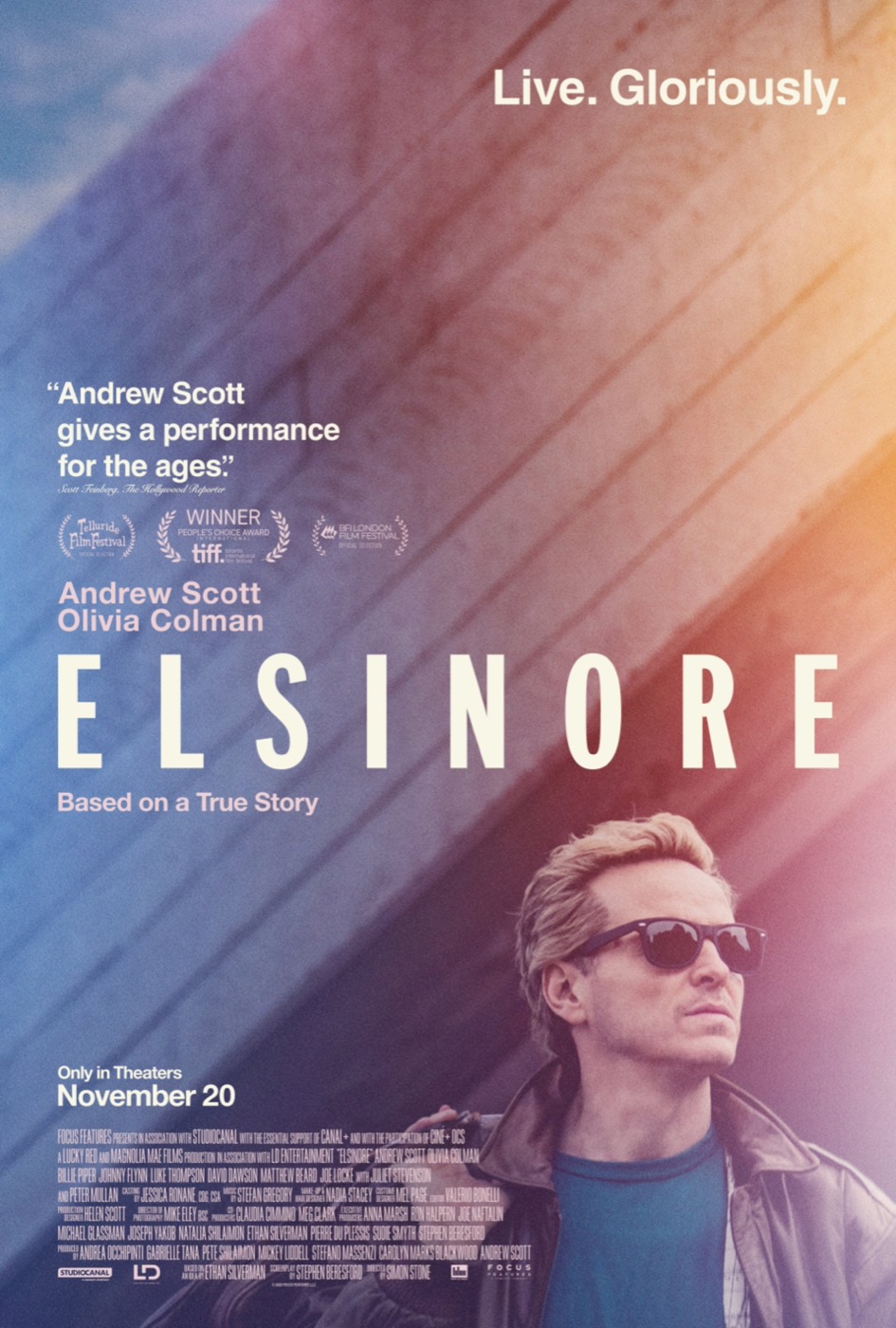
Ian Charleson wants to play Hamlet, and Elsinore makes that desire feel urgent enough to organise a life around.
Set in 1989, Simon Stone’s film follows the actor as he prepares to take on Shakespeare’s tragedy at London’s National Theatre while seriously ill with AIDS. The role demands an extraordinary amount from a body already under strain. Charleson understands the danger. He also understands how much this opportunity means to him.
Andrew Scott is exceptional in the part. He gives Charleson an intelligence and an appetite for his work that remain present alongside the illness. You feel the effort involved in continuing, but you also understand why he wants to continue. His ambition can be difficult for the people around him to accommodate. Scott makes it recognisable, particularly to anyone who has cared about doing something well enough to struggle to explain why it matters so much.
There is a particular pleasure in watching him work with Shakespeare. The language has thought behind it, and the performance allows you to understand Charleson’s attachment to the role. For a film built around the importance of an actor’s work, that is essential. We need to feel what he is reaching for. Scott makes the possibility of that performance convincing.
Olivia Colman is just as important to the film’s emotional balance as Dr Margaret Johnson. Her responsibility is to care for a patient whose priorities can put him at odds with the treatment he needs. The tension between them gives the story one of its most difficult questions: what does care require when someone’s idea of a worthwhile life involves a risk you are trying to prevent?
The strength of the casting extends throughout the film. Johnny Flynn, as Richard Eyre, helps make the theatrical work feel like a shared undertaking, with obligations and pressures affecting everyone involved. The ensemble gives Charleson relationships to exist within. His choices matter to other people, and their concern has its own weight.
Mike Eley’s photography is outstanding. The theatre has a scale and physical presence that help explain its hold over Charleson. At the same time, the images remain attentive to the person preparing to stand on that stage. The visual quality contributes to our understanding of the desire driving the story.
The silence surrounding sexuality and illness is painful throughout. HIV stigma and homophobia shape what Charleson feels able to disclose, including to people close to him. Watching that concealment now, it is difficult to place the attitudes behind it comfortably in the past. The film gives those pressures a personal cost.
What moved me most was Charleson’s insistence on having something he still wanted to do. Illness can make every conversation concern survival, while the person living through it continues to have ambitions, frustrations and unfinished work. Elsinore makes room for that complicated desire. With Scott and Colman leading an excellent cast, it gives the pursuit of a great performance the seriousness it deserves.